Much has been written about how the Interstate Highway System has changed the American landscape, causing small towns to be forgotten as people dash to and from their destinations.
When it comes to taking the fast route, I’m as guilty as anyone else; at least, when I’m in the car. But on motorcycle trips, I do prefer that “Road Less Traveled,” partly because leaning into a curve on a winding road is more fun, but also because that “Road Less Traveled” is, well … less traveled, as in fewer big trucks. I have nothing against professional truck drivers, but I do prefer to be on an entirely different piece of pavement than the 18-wheelers.
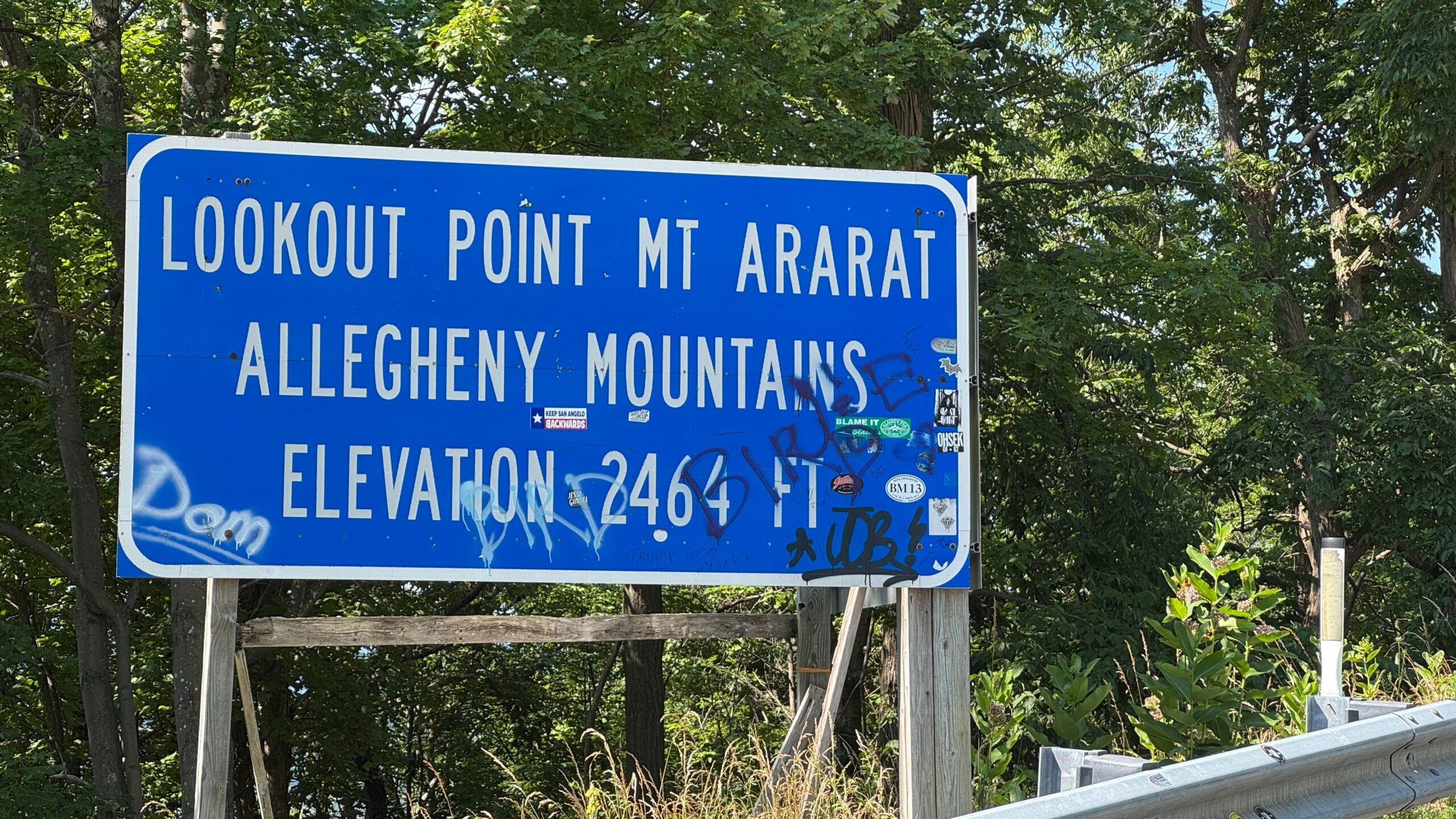
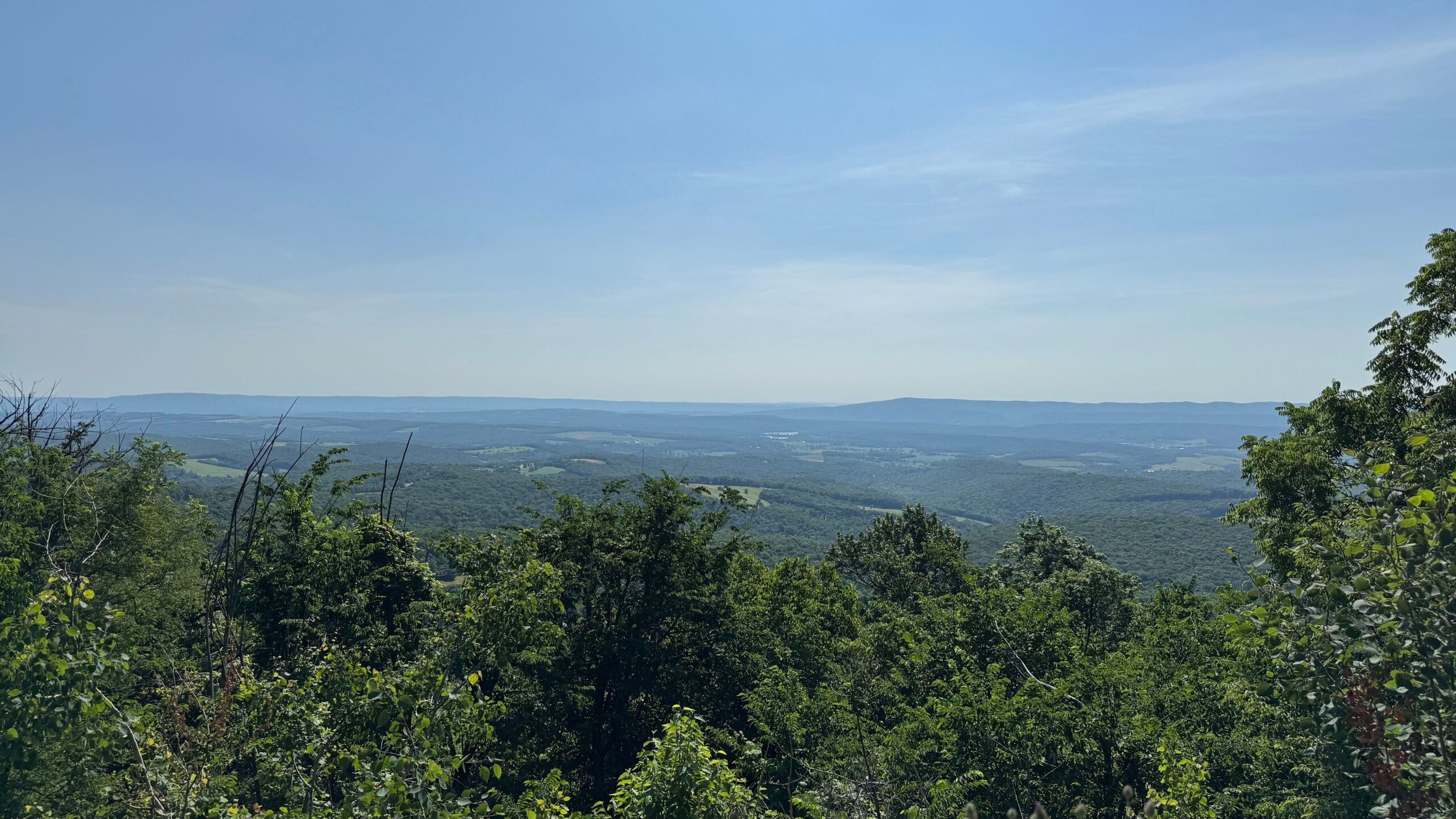
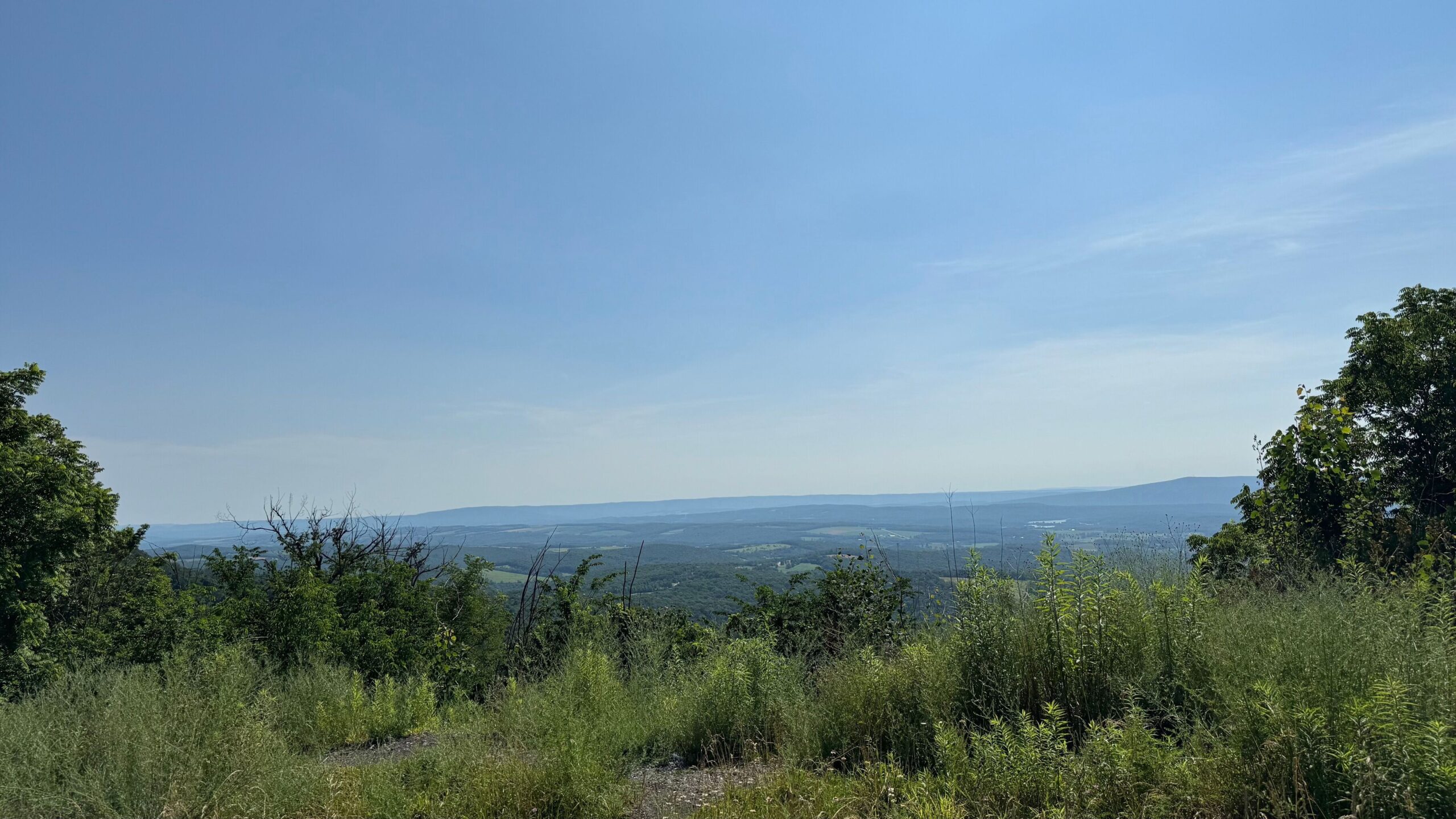
The Fourth of July weekend found me on US 30 between Breezewood and Greensburg. I had no particular schedule to keep, so I decided to check out one of the scenic overlooks on the way.
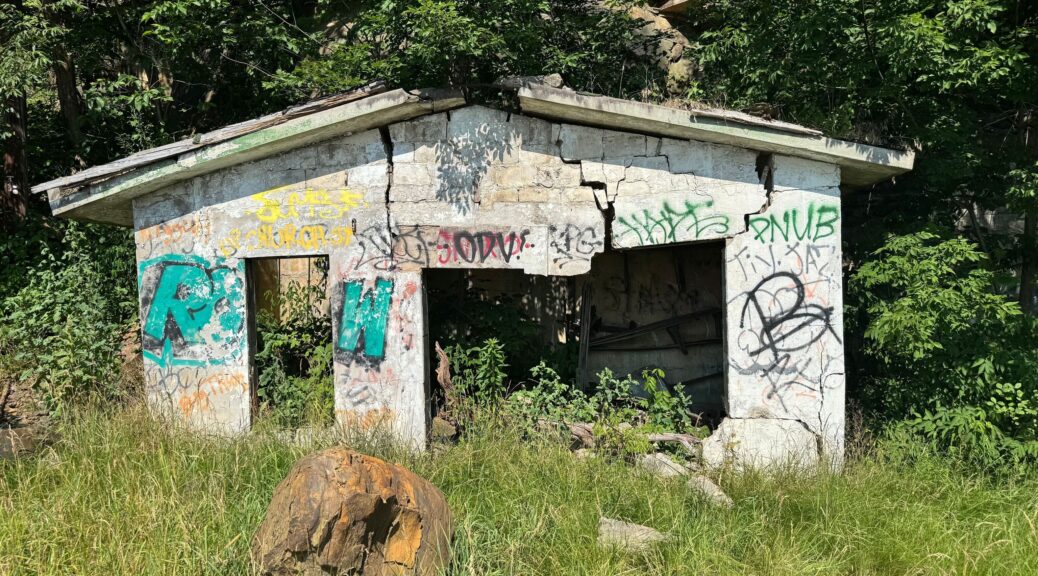
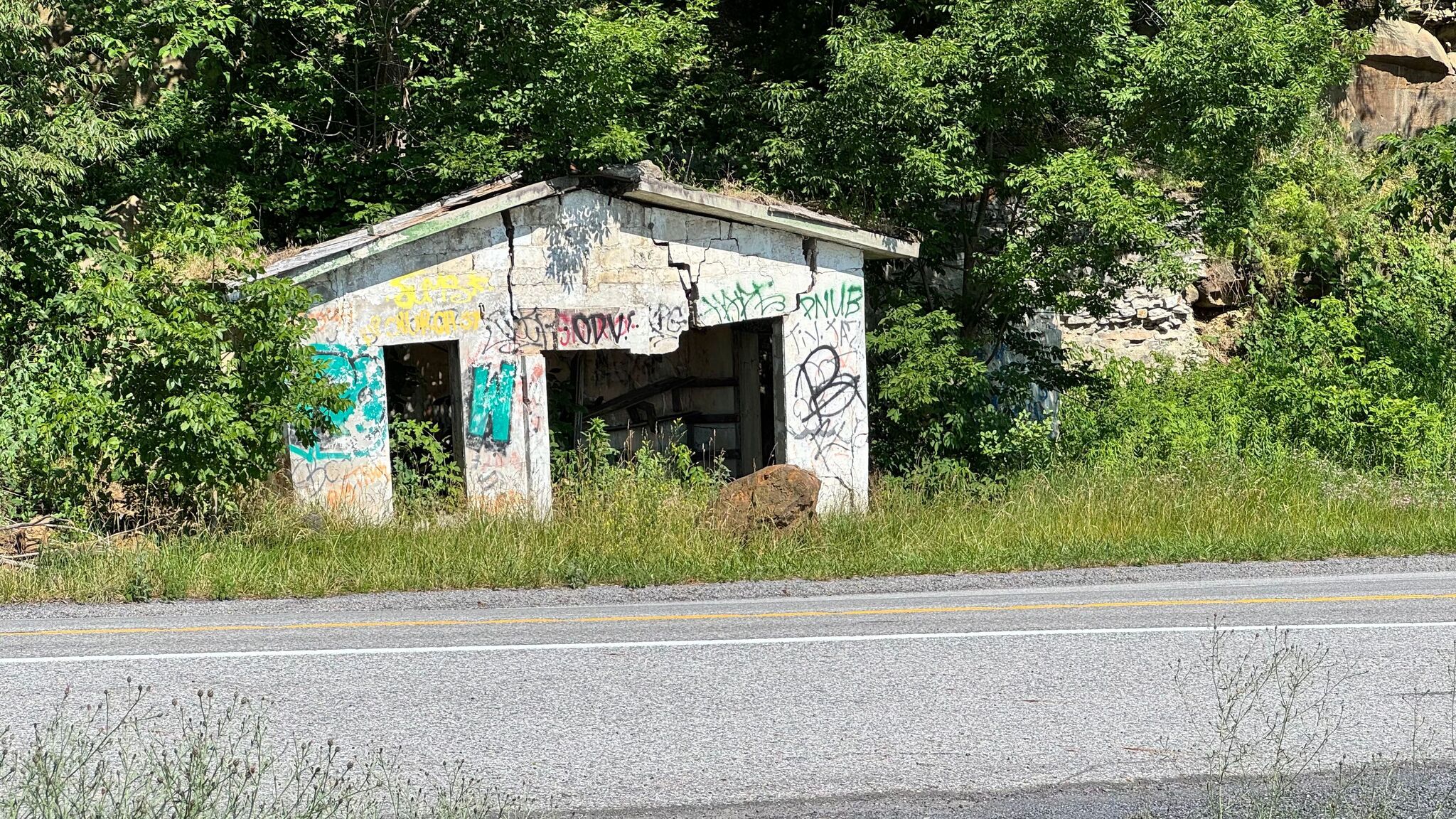
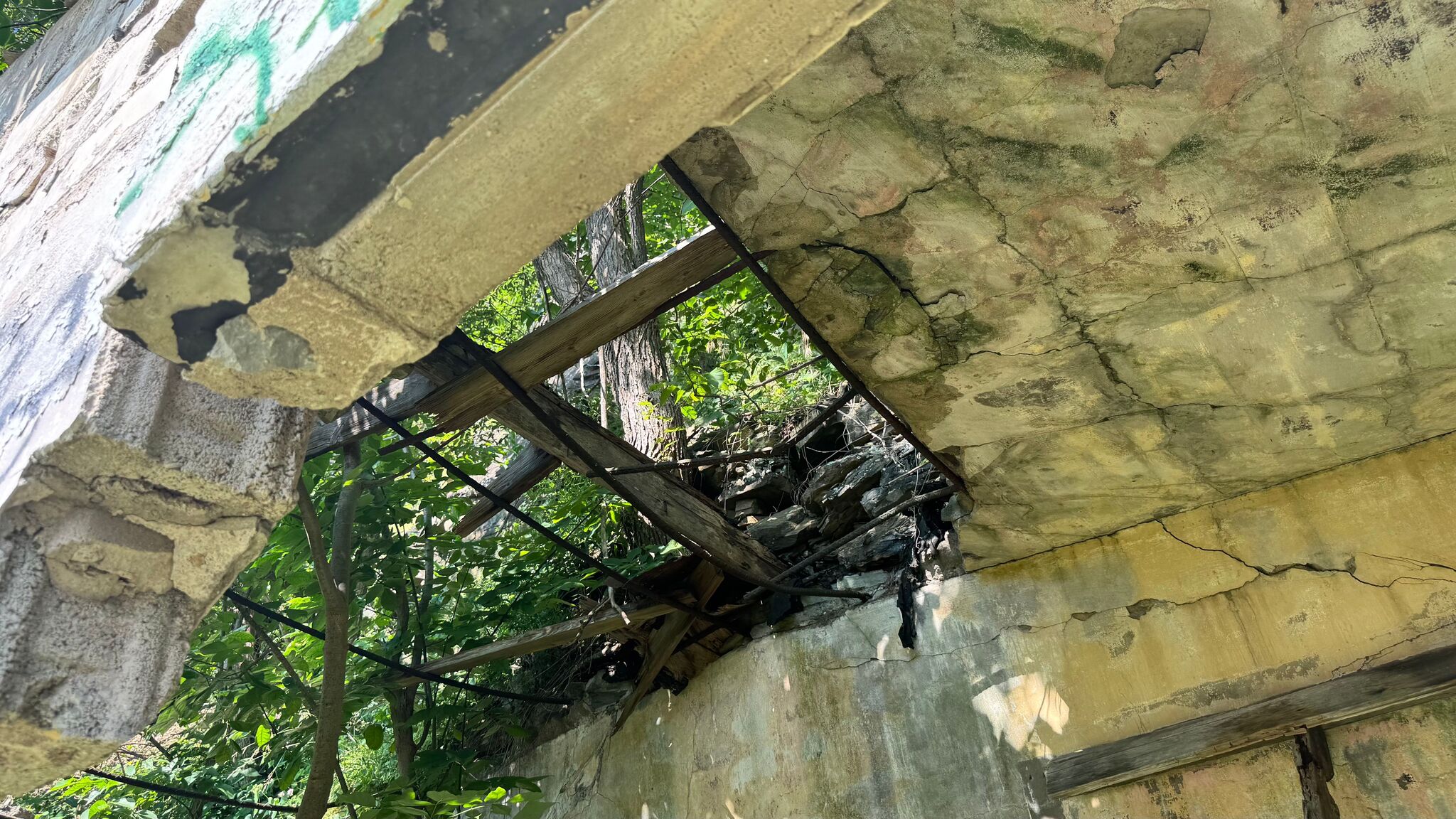
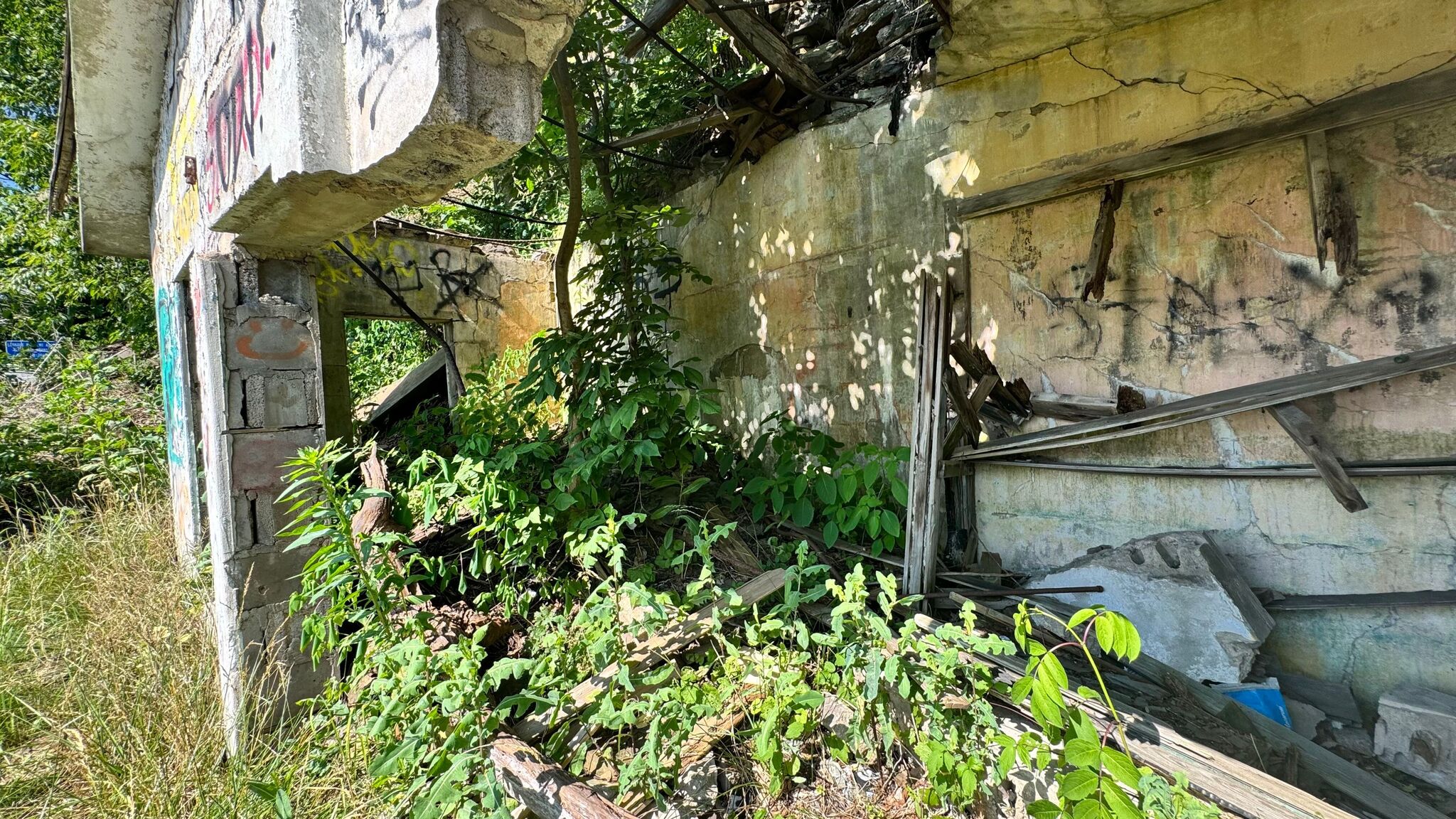
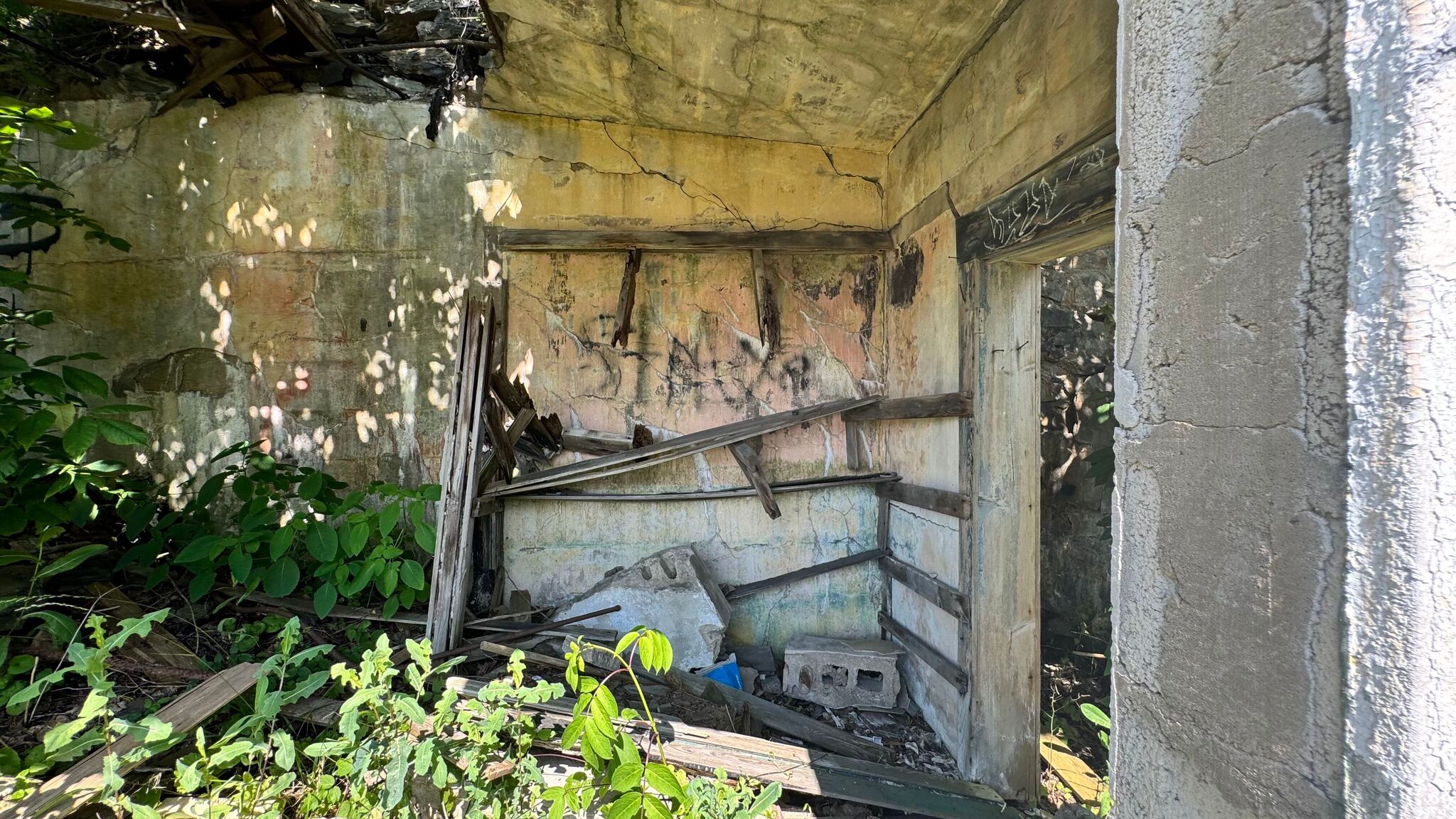
One thing that intrigued me was the ruins of a small building on the other side of the road. The building was built up against the side of the mountain, and was clearly designed to stand up to some rough treatment. Looking inside, you could see that even the roof was made of reinforced concrete, presumably to withstand falling rocks.
It’s a small building, perhaps 12 feet deep and 25 feet wide. The remains of some wooden shelves still cling to the back wall. The building is overgrown, covered in graffiti, and the interior is strewn with rubble from the hole in the roof.
My first thought was that perhaps it was a bus shelter, except the nearest buildings of any sort are over a mile away. Any kind of store seemed equally unlikely.
I posted a photo on Facebook and continued my trip while several friends speculated that, given US 30’s history as a major throughway, it might have been a gas station at one time. Turns out they were right.
A Google image search with my picture revealed that this structure possibly dates to the late 1920s when it was a gas station associated with the the “Grand View Ship Hotel” formerly located on the site of that scenic overlook. The hotel later did business as “Ship of the Alleghenies” and, in 1978 became “Noah’s Ark” which is a name I remember from my childhood when my parents would drive on US 30 on the way to my grandparents’ house on the other side of the state.
The hotel/restaurant burned down in late 2001 and all that’s left is a couple foundation walls and the ruins of the gas station.
Did you know the MacOS “Preview” tool can be used to capture the text in a photo of a sign? All you do is click on the first word, and then drag the mouse until all the text is selected. Press Command-C, and then you paste the text into another document. (The Windows Snipping tool has similar functionality, though I’ve not tried it recently.)
I’ve been working on a small photo site to share with my family. One of the photos is of the sign in front of a garden for the blind and I want to make the text easily readable outside the photo.
The thing with this photo is, it has a lot of text. And I mean, a LOT. (Go ahead and click the image below, you’ll see what I mean.)
I’m really impressed with the preview tool. Two click and drag operations and I had 95% of the text. All I had to was type the context of. one paragraph, and then do a bit of proofreading (plus remove some hyphens where the text no longer had line breaks.)
Less than an hour of work.
Curious what the sign says? Here’s the text
Welcome to Wynnewood Valley Parks’s Sensory Garden
The Garden’s Origins…
The Rotary Club of Ardmore, in partnership with the Township of Lower Merion; built and dedicated the Wynnewood Valley Park. Garden for the Blind and Children” in 1977.
Ardmore Rotarian and professional landscaper, the late Bill Mulford, spearheaded planning and construction of the multi-tièred garden which introduced Braille plates to identify the individual flowers and shrubs. Prominent among the plantings were 25 cherry trees, a gift from the Rotary Club of Tokyo, Japan in appreciation for a 1973 gift of 300 dogwood saplings from the Ardmore Rotary Club for the Imperial Gardens. The saplings replaced many of the.garden’s 50 dogwood trees which had been damaged during WW II. The 50 dogwood trees, a 1912 gift from the United States of America, were in appreciation for 3000 cherry trees from. Japan which were planted earlier along the Potomac River in Washington Đ.C.
Ardmore Rotarians and the Men’s Garden Club of Delaware Valley maintained the Garden for the Blind until the Garden Club members were unable to continue, In 2005, the Rotary Club of Ardmore, under the leadership of Past President Dr. Douglas Klepfer, decided to restore the Garden, committed funds and began to build a new partnership with Lower Merion Township, Lower Merion Conservancy, the Penn Wynne community and others. A major contribution was presented by The Kistler-Tiffany Foundation to purchase all the plants.
The result is a beautiful new sensory garden and park entrance walkway accessible for all to enjoy. Included in the landscaping are the 12 new “Cherry Trees of Goodwill” donated by the Rotary Club of Tokyo in appreciation for Ardmore Rotary’s gift of 200 pink and white dogwood trees to the Rotary Club of Tokyo in 2004. The trees have been planted in the Imperial Gardens and throughout Japan. The Lower Merion Conservancy has committed its services for garden education and maintenance.
The restored Garden exemplifies the “spirit of the flower that binds the world together” as the Tokyo Rotary Club concluded when accepting the 2004 gift of dogwood trees. Planted in late 2010, the garden celebrated its ribbon-cutting ceremony on May 9, 2011.
The Plants in the Garden…
The Sensory Garden bas 73 species of plants including herbaceous plants and trees and shrubs.